
Air-to-water heat pumps <20 kW | VIESSMANN
Product description
Monoblock heat pump – compact and quick to install
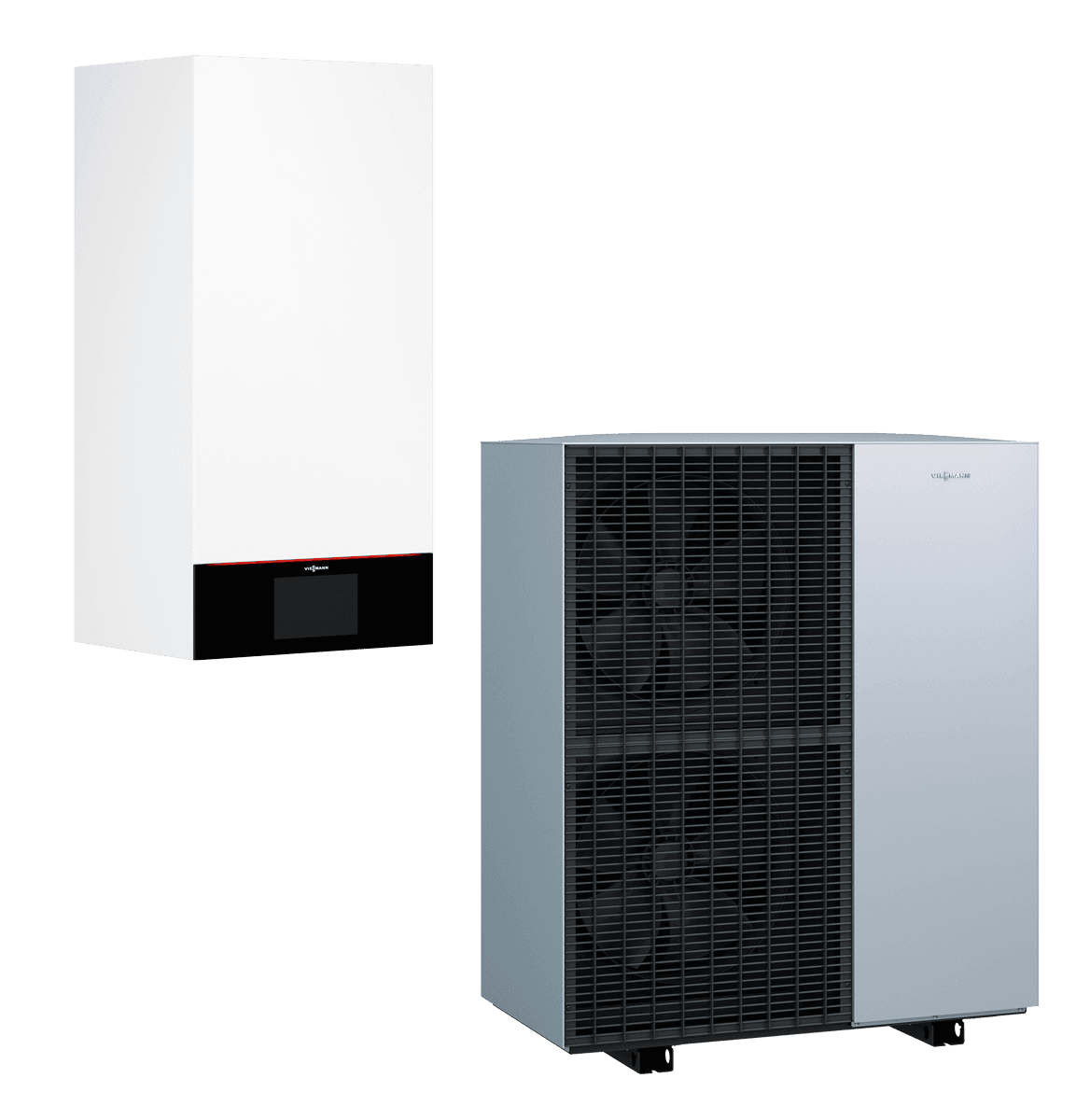
A monoblock heat pump uses energy from the surrounding air for heating. Unlike split-system air-to-water heat pumps, the refrigerant circuit required for this is contained within a single unit. The advantages of this solution are explained below, along with the key factors to consider when deciding in favour of a monoblock heat pump.
A special design with the same function
The principle behind heat pumps is essentially the same: heat from the environment is transferred to a refrigerant, the temperature of which is raised through a technical process, and then transferred to the heating circuit. The heat obtained in this way can be used for both heating and domestic hot water production. A distinctive feature of monoblock heat pumps is that all components involved in the refrigerant circuit are housed within a single compact unit:
- Evaporator: Thermal energy is transferred to the liquid refrigerant, which then evaporates.
- Compressor: The refrigerant vapour is compressed, causing the temperature to rise.
- Condenser: The refrigerant vapour transfers heat to the heating circuit and condenses again.
- Expansion valve: The temperature of the refrigerant drops to its initial temperature.