
BSP KW1 PAS – PASSIVE VENTILATED CLADDING SYSTEM WITH SUBSTRUCTURE
1. SYSTEM
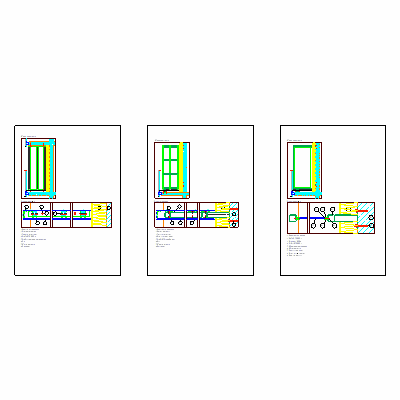
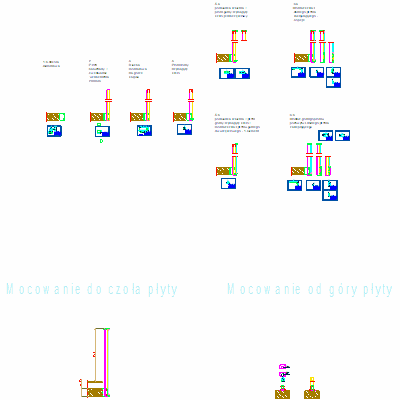
The BSP KW1 PAS passive substructure system is a versatile substructure system for fixing a wide variety of cladding materials to external and internal facades using ventilated facade technology. The system consists of BSP KW1 PAS passive brackets and vertical aluminium profiles, most commonly BSP KWR1 and BSP KWR2. All aluminium components of the BSP KW1 PAS system are manufactured from extruded aluminium alloy EN AW 6060 T66 or EN AW 6063 T6.
2. CONSOLES
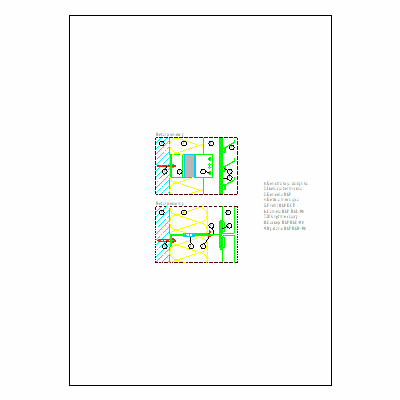
The BSP KW1 PAS passive brackets have been designed to meet the increasingly stringent regulations regarding the thermal insulation performance of external partitions. These components serve a structural function, transferring vertical and horizontal loads from the façade to the building structure. There are two types of brackets: load-bearing brackets, which transfer both vertical and horizontal loads and are fixed to two anchors, and wind brackets, which transfer only horizontal forces and are fixed to a single anchor. The specially designed shape of the brackets and the carefully selected materials from which they are manufactured allow for a relatively high load-bearing capacity whilst maintaining very favourable thermal insulation parameters. By using BSP passive brackets, the effect of ‘thermal bridges’ in the thermal insulation layer of the external façade can be significantly reduced. The passive bracket consists of aluminium components and a thermal insulation spacer.
The KW1 PAS passive bracket consists of aluminium components and a flat thermal insulation spacer. The wall thickness of the aluminium base of the bracket is 3–4 mm, depending on the projection. The wall thickness of the aluminium end cap, on the other hand, is 3 mm. The end caps are fitted with special 1.5 mm thick brackets and fixed and adjustable holes of standard M5 diameter, into which the substructure profiles are fixed. The holes allow for free expansion of the aluminium profiles.
The thermal break is manufactured from an epoxy-glass laminate with a thermal conductivity coefficient of λ=0.36 W/(m·K). The thermal break is secured to the aluminium components using stainless steel rivets. Thanks to the spacer’s favourable thermal insulation properties, this bracket is an excellent product for use in energy-efficient construction, as confirmed by the certificate awarded by the Passive House Institute in Darmstadt.
The console is classified as non-fire-spreading when exposed to external fire. In terms of fire performance, it has a B-s3,d0 rating. It also has a positive opinion from the ITB regarding its use above 25 m and in fire separation zones.
3. PROFILES
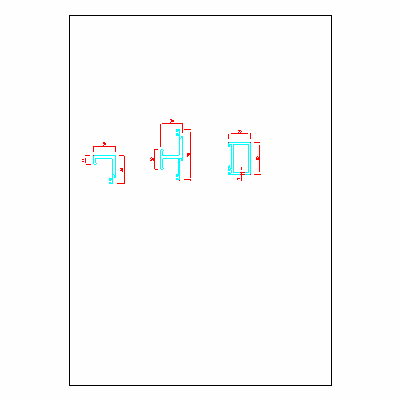
BSP KWR1 profiles are T-shaped profiles used to join façade panels. BSP KWR2 profiles, on the other hand, are angle profiles used as support profiles in the central section of the panels. The flange thickness of the profiles is 2 mm. The 70 mm flange width ensures high rigidity of the profiles, allowing them to be fixed at wide intervals. The angle profiles have a front wall 50 mm wide. T-profiles, on the other hand, have a front wall 120 mm wide, which allows for relatively significant horizontal adjustment at panel joints and enables the fixing of panels where a large fixing distance from the edge (<45 mm) must be maintained. The surface of the front walls of the profiles is grooved, which provides a larger bonding surface for the panels. The profiles are fixed to the brackets using 4.8x19 A2 self-tapping screws.
4. GENERAL
The aluminium components of the BSP substructure are classified, without testing, as Class A1 for reaction to fire in accordance with standard PN-EN 13501-1+A1:2010, pursuant to European Commission Decision No 96/603/EC, 2000/605/EC and 2003/424/EC.
The BSP KW1 PAS substructure system is classified as durability class B in accordance with PN-EN 1999-1-1:2011 and can be used without protective coatings in environments with atmospheric corrosion categories C1, C2 and C3 according to PN-EN ISO 12944-2:2001. Following an additional protective treatment – anodising of the aluminium components – it may also be used in environments with atmospheric corrosion categories C4.
Furthermore, the system has been approved by the ITB in accordance with Section 225 of the Regulation of the Minister of Infrastructure as maintaining its integrity under fire conditions for a period of not less than 60 minutes.
The system described is covered by a National Technical Assessment and a National Declaration of Performance.
The BSP substructure should be installed in accordance with a detailed design drawn up by designers with appropriate expertise in the field of structural engineering and construction. The layout of the substructure and the spacing of the components (strength of the entire system) should be verified by structural calculations prepared by a structural engineer with relevant qualifications in the field of structural engineering and construction.
Panel types available for this system:
- Architectural concrete
- Porcelain stoneware
- HPL
- Stone
- Steel panels
- Aluminium composite – panels
- Aluminium composite – flat panels
- Rockpanel
- Quartz sintered
- Glass
- Fibre cement
https://www.bspsystem.com/systemy/system-pasywny-bsp-kw-pas/
Dimensions of the brackets
Wait, we have more of that

PROJECTS
1558419-full
1558340-full
1558336-full
1558337-full
1558343-full
1558422-full
1558338-full
1558344-full
1558335-full
1558339-full
1558417-full
1558423-full
1558334-full
1558342-full
1558333-full
1558420-full
1558341-full
1558418-full
1558421-full
TECHNICAL SPECIFICATIONS
1557187-full
1557186-full
1545926-full
1557208-full
1557207-full
1557189-full
1557185-full
1545927-full